
Author Bio: Vidhatanand is the Founder and CTO of Fragmatic, a web personalization platform for B2B businesses. He specializes in advancing AI-driven personalization and is passionate about creating technologies that help businesses deliver meaningful digital experiences.
Have you ever clicked on an article, thought it was well written, perhaps even liked the images, then closed the tab without taking any further action? No registration, no scroll to the bottom, no next steps. It is weird when all things appear to be going well. Now imagine yourself as the one who made that content. You found a topic to write about, made it search engine friendly, selected the best picture, perhaps even paid to advertise it. But conversions? Still far from what you expected.
That is the silent suffering of many marketers and business leaders. An enormous effort is used to bring people to a webpage. However, retaining them and making them act is a different story altogether. And more often than not, the missing ingredient is actually very simple. The content lacks a personal touch.
This is the personalization gap. It is the gap between the expectations of people and what they receive. You go to a site and it does not talk to you. It appears to be good but it feels as though it belongs to another person. Marketing is all around us. Individuals scroll, swipe and skip through endless messages. When people are not connected to content immediately, it dies quickly. More content is not what people desire. They desire content that seems personalized. Recent figures show just how wide this gap is. Approximately 70 percent of consumers demand that brands know their unique needs. However, 76 percent are frustrated when it fails to occur. And 93 percent say the marketing messages they get are frequently out of touch and fail to resonate.
Real personalization is more than using a first name in an email. Susan Solovic puts it simply: people are tired of feeling like just another face in a crowd. They want to feel seen and understood. Now here is the real question. With personalization being this important, why are brands not getting it right? And how do we begin doing it better? This is what we will discuss in this blog. We will open up what exactly the personalization gap is, why it is bad at conversion and how to address it with easy to implement strategies. We will explore what works and what we can do in addition to understanding your audience and creating content that resonates to finally bridge the gap.
What is the Personalization Gap, and Why Does It Matter?
Having discussed the reasons why high-traffic content does not necessarily result in high conversions, it is time to take a closer look at the actual problem behind it. We have mentioned the concept of the personalization gap earlier, but what does it mean, and why does it have such a tremendous impact on the success or failure of our content?
Content personalization is the art of displaying to individuals what can be of real interest to them. It involves tailoring the content that an individual observes depending on his or her preferences, behavior, or status in the buyer journey. Rather than providing one version of the content to all people, you are molding it so that it satisfies various needs and expectations. You can imagine it like going into a shop and seeing the shelves in the shop laid out as though they were prepared especially for you. Such is the experience of personalization.
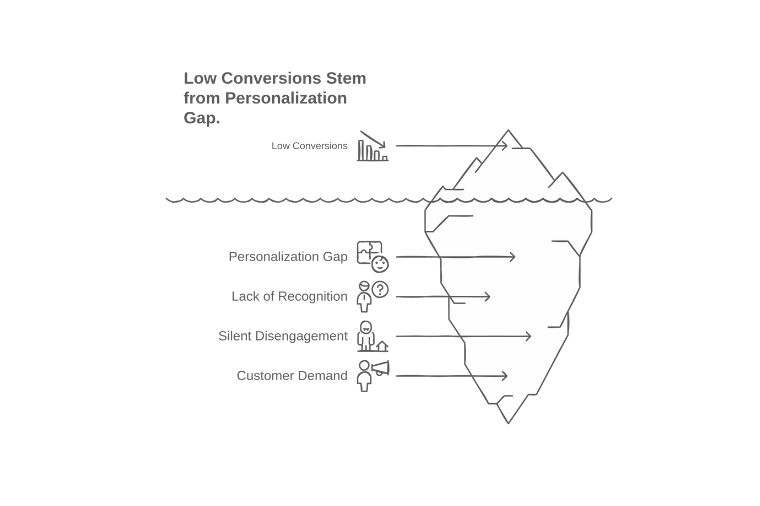
The issue is that most companies continue to provide a one-size-fits-all experience. This is where the gap starts. When a person visits a page and sees something that might as well be written about anyone, they do not feel recognized. When individuals feel they are not understood it is unlikely that they will stay or act. This silent disengagement is what causes less engagement, missed opportunities and lost conversions. The modern consumer demands more.
They want to be known by the brands and what they value. In fact, 44 percent of customers report that they would change to brands that communicate in a more individualized way. It is not even a matter of what is nice to have anymore. People no longer respond to generic marketing as much as they used to because they are not interested in information that is not personal to them. They scroll past it, skip it, and forget it almost immediately.
This change of expectation is transforming the ways effective companies develop content. It is no longer about just adding a name to an email. It is about giving something that is specialized and helpful. Netflix and Amazon are the brands that have set the bar high by ensuring that each interaction is personal. Their content suggestions tend to be so precise due to the fact that they are based on a knowledge of personal preferences and behaviours.
And this is where the marketers can find an opportunity. The personalization gap does not always mean a permanent barrier. When we start to understand what it is and how it influences the behavior of users, we will be able to start building content that feels relevant the moment they click on it.
How Personalization Drives Conversions
With the understanding of how the personalization gap discreetly inhibits engagement and conversions in mind, the next logical question is, what happens when brands finally begin to close that gap
Personalization is not a buzzword. It affects the interaction of users with a brand in a clear and measurable way. People will interact more when the content is made to suit them. They click, browse and spend more time. Such relevance not only attracts attention, but it retains it as well.
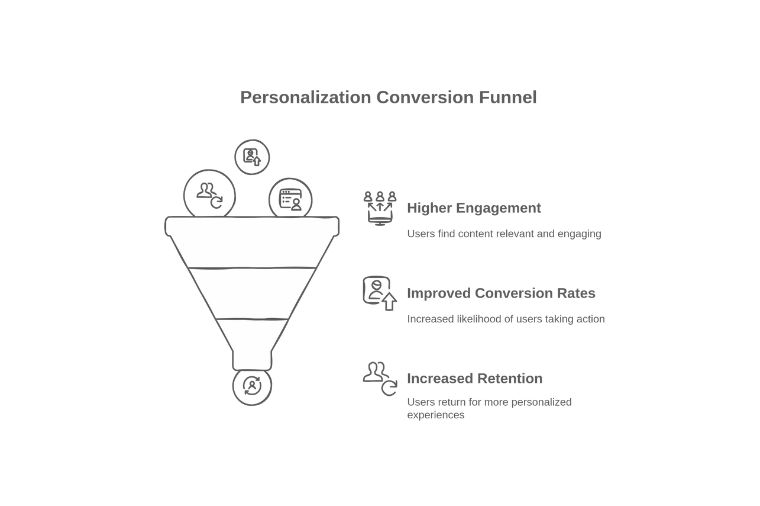
- Higher Engagement
The engagement is enhanced since individuals feel that the content is aware of their needs. It is helpful, relevant, and in line with what they are interested in. That is what may make the difference between a bounce and a conversion. In fact, personalized sites have recorded a 19 percent rise in sales.
- Improved Conversion Rates
Such a degree of connection also enhances the chances of a visitor taking some valuable action. Relevance increases the likelihood to sign up, make a purchase, or contact to learn more. The companies that focus on customer-oriented marketing have experienced an increase in online sales by 25 percent
- Increased Customer Retention and Loyalty
In addition to conversions, personalization increases long-term loyalty. When the users revisit and always get what suits them, they start believing in the brand. They feel they are understood, and that emotional appeal results in repeat business and stronger relations.
Take the case of Sally Europe. They increased email-attributed web sales by 43 percent year over year by changing to a more personalized and conversational style. They also experienced a 19 percent increase in average order value and a 20 percent increase in the total monthly sales through digital channels. Brands such as Nike are also leveraging personalization to deliver results even on a global scale. Nike Hong Kong used first-party data and AI to segment customers and then customized seasonal campaigns using user behavior. The outcome was a visible boost in the rates of purchases and interaction.
Actionable Strategies for Personalized Content
Once you have witnessed the mighty impact that personalization can have, in terms of conversion rates, and long-term loyalty, the question arises, how to do it, actually? The silver lining is, closing the personalization gap is not impossible. Even small steps can bring significant change with the appropriate strategies.
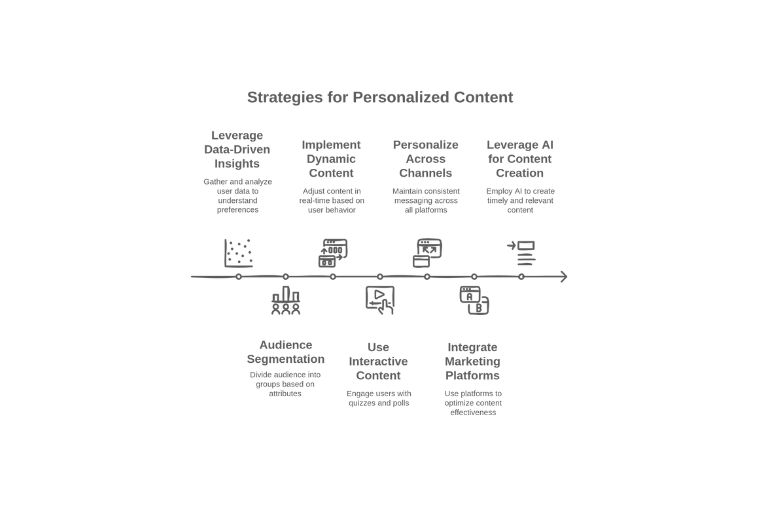
- Leverage Data-Driven Insights:
The first step is to know who your audience is. Surveys and feedback forms provide direct information about what users desire and tools such as Google Analytics provide behaviour patterns that can be used to make smarter choices. By gathering zero- and first-party data, marketers can curate experiences that truly represent user preferences
- Audience Segmentation:
After getting to know your audience, segmentation is a logical next step. Segmenting your audience into small groups based on attributes such as location, interests, or previous behavior enables you to deliver more relevant messages. It changes the one-size-fits-all strategy to communication that will appeal to every group.
- Implement Dynamic Content:
Dynamic content goes a step further and changes what people view in real time. Depending on the visitor, landing pages, shopping carts, product recommendations, and even blog posts can transform. This makes every interaction more personal and tailored to what the user actually requires.
- Use Interactive Content:
Engaging tools, such as quizzes, polls, and calculators, can help to keep users occupied, but also provide insight into their interests. This assists in further streamlining the content experience.
- Personalize User Experience Across Channels:
These efforts are most effective when they are coherent throughout all channels. The tone and message should be adopted to represent the journey of a person when opening an email, scrolling through social media, or calling customer support. CRM tools assist in ensuring this continuity by monitoring and keeping track of interactions and preferences.
- Integrated Marketing Platforms:
To tie all this together effectively, most teams use conversion rate optimization platforms(CRO). Such platforms make it easy to test various content components and understand what is the most effective for each group. They assist in determining which messages, layouts, or user journeys are used more, so brands can make changes and enhance in real-time, without having to speculate.
- Leverage AI for Content Creation:
The additional layer of power is provided by AI, particularly when together with CRO tools. Having access to vast data, AI will be able to identify patterns and provide content that will feel timely and relevant. Even predictive analytics can be used to decide the optimal time to contact or suggest the next product in the user path.
Think of the brand that applies AI to find out what product categories the various customer segments react to. When they compare that insight to inventory they have, they can present the user with content that is regional and habit-specific. Such an amount of detail makes this experience no longer generic but truly helpful.
Proving the ROI of Your Personalization Efforts
The feeling of personalization is strong when the engagement increases or the feedback becomes more enthusiastic, however, measuring its actual worth requires a structured and clear approach.
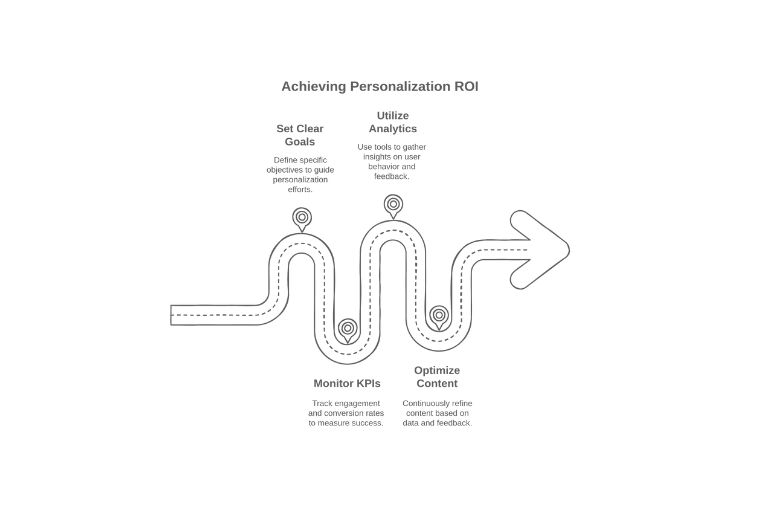
- Setting Clear Goals:
It starts with the establishment of certain goals. This might include such easy actions as signing up to newsletters or larger actions such as a purchase. Establishing an idea of what success should be at the beginning will provide context and meaning to all the content produced.
- Key Performance Indicators (KPIs):
When these goals are established, attention is next, directed to performance measures. Engagement rate is a good indicator. When individuals spend more time on a page, go through more of your pages, or share your material, this is an indication that something is working. Conversion rate reveals the number of such interactions that result in a desirable action. This is where a customized experience actually assists users to take the next step
The other indicator is the bounce rate. When the users abandon too fast, it indicates that the content was not what they expected. However, when they remain, scroll and engage, it indicates that you have connected. Time on page is also useful in validating whether users are finding the content worth spending time on.
- Utilizing Analytics Tools:
A number of tools may aid in monitoring these insights. Google analytics provides user behavior and conversion paths reports. Heat Mapping tools such as Hotjar and Crazy Egg display where individuals tap or wait, and it is possible to see what is capturing their attention. Surveys, reviews, or even comments can be used to get feedback that can reveal what users actually think and feel
CRM like HubSpot and Salesforce may demonstrate how customized content influences the quality of leads and their movement through the sales funnel. Experimenting with content variations With A/B testing tools such as Fragmatic, it is simple to test various content variations to get a feel of what works best with your audience.
- Continuous Optimization:
Regular updating and revisiting of content is also important. Periodic content audit (every few months) would help identify what is doing well and what should be improved. Within a long run, even minor changes based on actual statistics can result in a visible increase in engagement and conversions.
Conclusion:
Personalization is not a buzzword anymore or a feature that we would like to have. It is now an essential aspect of the communication and connection of modern businesses with their audiences. Content is personal, as it showcases needs, preferences and behaviors, it changes the way people interact and makes them more inclined to trust, interact and convert. Instead of providing the same experience to everyone, brands that have adopted personalization are raising the bar on user satisfaction and long-term value.
It is not merely a conversion rate shift. It is more about understanding that customers would like to be understood. Personalization leads to loyalty, stronger emotional associations, and positive brand images. With the further development of digital experiences, the companies that focus on personalized content will stay relevant and competitive.